Friday, 8 February 2019

Round Velvet Pillow DIY

Are you as obsessed as I am with all the velvet pillows?  If so, read on.


SUPPLIES:
-1/2 yard velvet fabric
-thread to match the velvet
-fabric scissors
-ruler
-straight pins
-pillow form 


While fabric hunting I found this perfect peach velvet fabric and because this is the color of everything good & right in my house right now, I bought some.  I knew exactly what I was going to make!  I thrifted a cushion form several months ago, so all I did was measure across the pillow, right direct center from one side to the other.  Now I took that number and added 1/2" to it so my total was 14 1/2 inches.  That would give me a 1/4" seam allowance all around.  I literally just freehanded it as I drew an X as my center point then just marked out 7 1/4 inches from that X til I had the complete circle marked.  


 From here I just took my pencil and connected the dots and cut out the circle shape.  LOOK at the color!!  **SIGH** This is the front of my pillow.  Now to cut the two back pieces. 


To do this basically I folded my circle in half.  I took the straight edge of my leftover fabric & measured up 3 inches and marked that.  I laid my folded circle, straight edge on the line and just traced the top of the circle on the fabric. 


I cut this piece out, then traced it again on the fabric to give me two back pieces. I cut the second one out. 
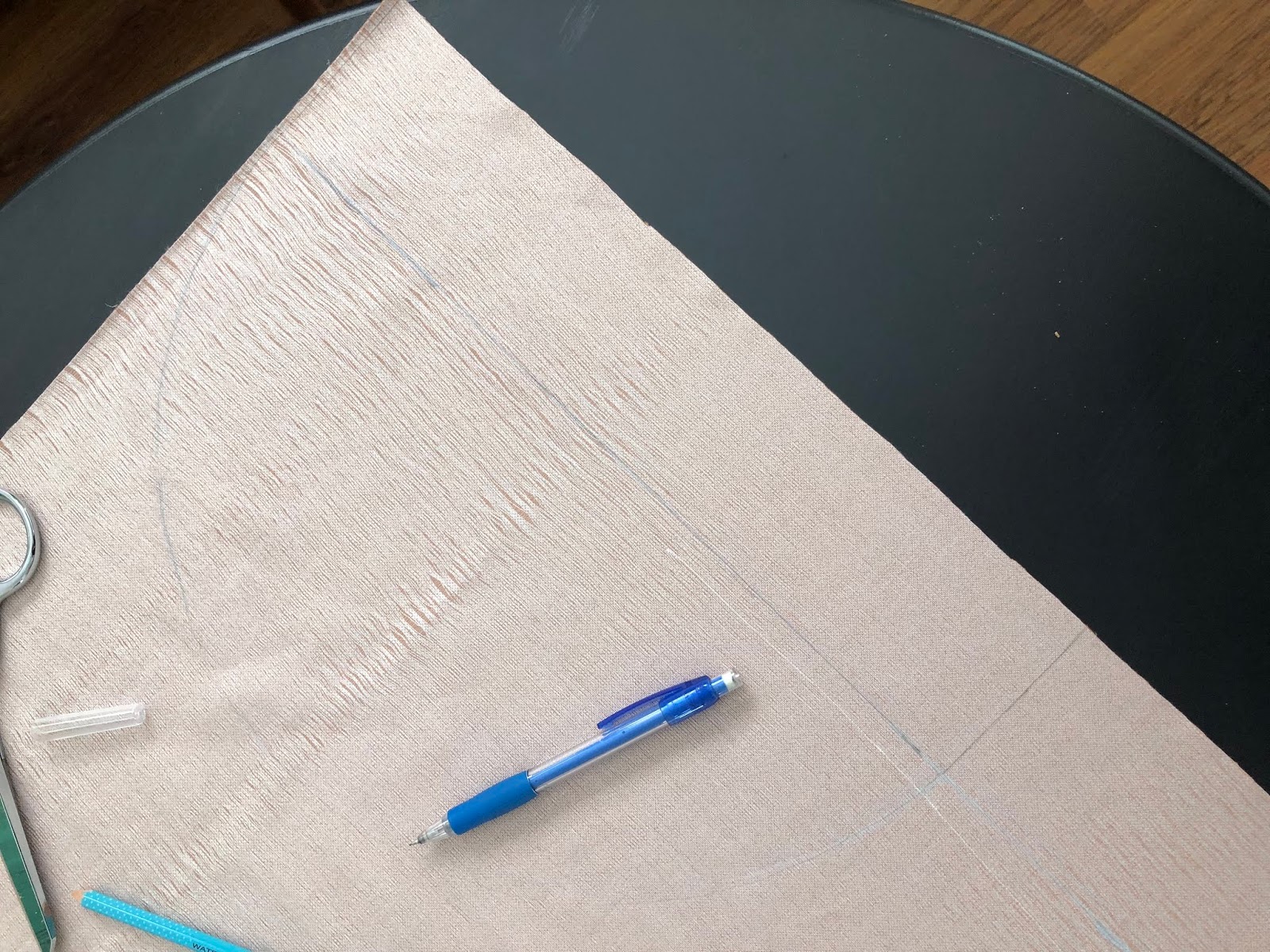

 Here is what you should have cut at this point.

 Next I needed something as a batting for the quilted top.  I did not have quilt batt, so I dug in my fabric stash and found some polar fleece.  This was perfect!  I cut out a circle by just laying my velvet piece on top and cutting around it. 


Next, I needed a backing for the fleece.  This also serves as the place for you to trace your lines on so you can sew the starbrust pattern on.  I just used some quilting fabric I had and it doesn't need to match because it's on the inside of the pillow.


Use a ruler to draw your lines on.  I did the first two, in a direct straight cross, then I did 3 between each quarter.  You will have 16 pie segments in total. 


Pin the 3 layers together, making sure your velvet is right side facing out.  Pin them together and just start stitching your lines.  Pay attention to the tension on your fabric.  Keep it a bit taut as that will help prevent any fold overs on the bottom side in your stitching. 


 YESS!!!  It looks great!!


Press the straight edges of your two back pieces over 1/4" then stitch into place. 


Take your two back pieces, any lay the on top of your quilted pillow front.  (OOPS...just realized I forgot to photograph this step..DANG IT!!!!) These will overlap.  You might find you will need to trim a little off the edges of the two flaps to make it fit into the circle of the top.  Go ahead and do that.  Now pin them and stitch the two back pieces to the front, right sides facing together. You are creating an envelope of sorts.  That's it!!  Turn inside out and insert your pillow form. 


"Isn't she loveeelllyyyy?  Isn't she wonderfffulll"


Fluff, rearrange, swoon.  Lather, rinse repeat.  :-))


SHARE:

Sunday, 13 January 2019

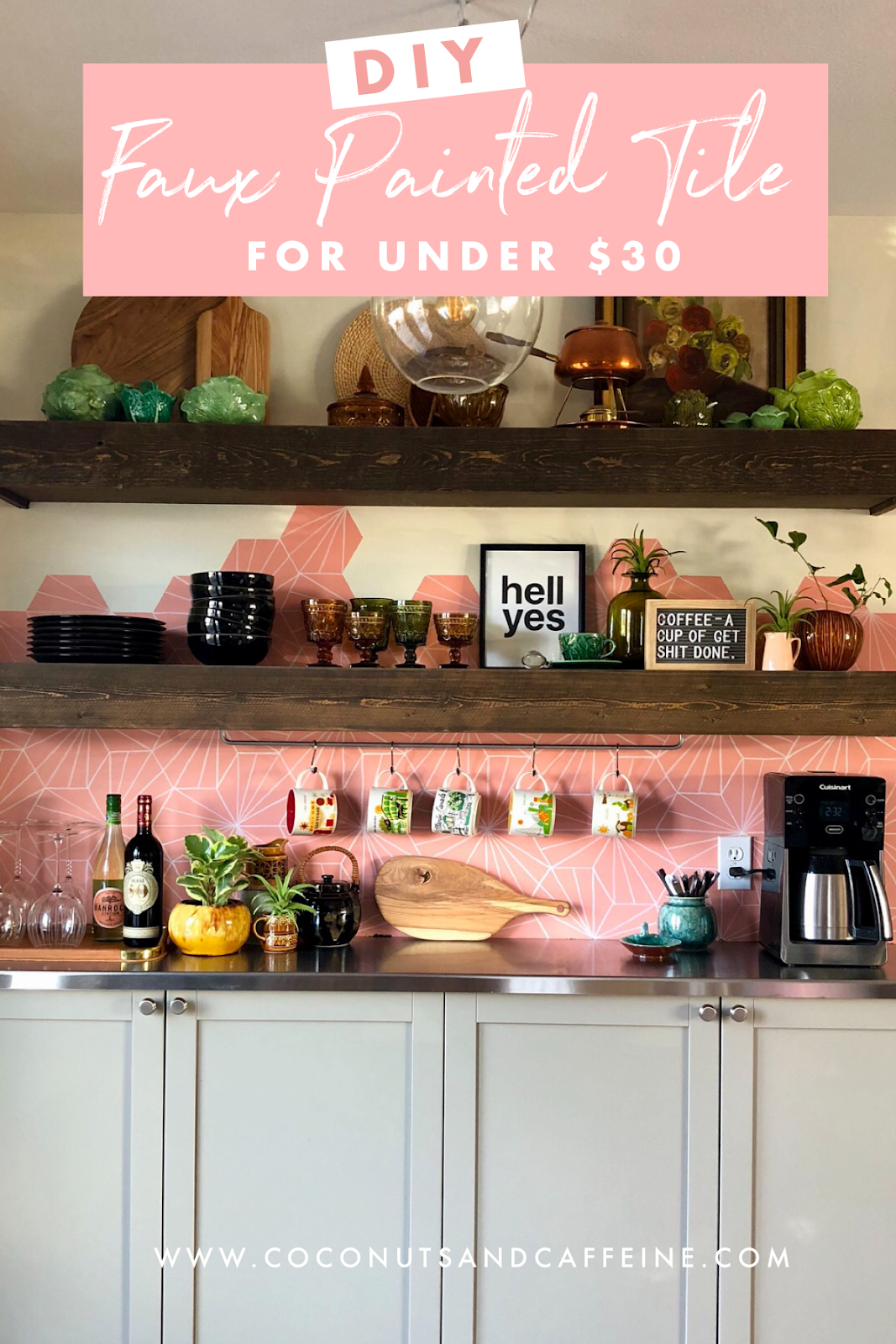
DIY Painted Faux Tile


It all really started when I found this teensy blush pink coffee creamer and I painted my front door PINK!!  Then the idea snowballed to bring the color in to another part of my house, and my coffee station was on my mind for change and it was a perfect fit!!  I used the next color darker down on the paint chip from my front door, called Priceless Coral, from Behr.  It needed to pop just a bit more for me and it worked! 


I wanted to keep this project as budget friendly as possible and I am proud to say the total was under $30.00 for the can of paint. That's it! Here is a look at the before picture.  I LOVE my coffee station, but it was time to zhuzz it a bit and make it brighter!


I also needed a template for the hexagons so I had an idea to use the marker from Shift Shop, a fitness program I have done a few times in the past.  This was PERFECT!!  They were also flexible, making it perfect to trace the pattern on around the shelves!  I tried a few colors out, then I actually tested my idea out on a piece of foam board to make sure my brain and the final product matched up! 


I did buy a few different color testers out because I wanted to play, but ended up going with my first choice.  Isn't that always the way? 

After taping things off, I started in with painting one coat of white and coral then I needed to get pattern placement done. I just estimated where I figured the coral would be ending and then started.  I did a second coat of white, then mocked up the pattern on the coral, then the white.  I taped it off and the painted on the rest of coral.  Then I gave the coral a second coat. 


The next morning, I started in the center bottom and traced on the hexagon grid.  I used a white colored pencil, so the lines were just visible enough to see.  Of course, I was using white paint for the lines, so this was perfect.  I just used some of the white wall paint, and made sure to add drops of water to it to keep it flowing as needed. Latex paint thickens as it is exposed to air so this is important.  


After the grid was made, I then traced on the other lines inside the hexagons by using a ruler and the white colored pencil again.  

Then it was time to get to work!  It took most of the afternoon to paint all the lines because the angles were awkward and it was hard on the arms. But with copious amount of coffee and sheer determination, it got finished! I just used a small round brush I got at Michaels.  It was a LOT of linework, but to me it is therapeutic and I loved it actually. :-)


I shopped my house for all the decor because that kinda thing makes my budgeting soul VERY happy!  

SIDE NOTE:  I do have to pick up a teensy piece of moulding for the back of the station (there was caulking residue I just didn't remove properly) but that will only be a few dollars.  Overall, I am proud of how it turned out and LOVE the insane new vibe this side of my kitchen has now.  And most of all, I proved to myself that I could do this on such a small budget!  WOOP WOOP!! 


TIME LAPSE OF ENTIRE JOB:


SHARE:

Tuesday, 28 November 2017

Pallet Coffee Table DIY


After seeing all the pallet projects over the years I decided it was about darn time that I hopped on the bandwagon. The project most appealing to me was a coffee table.  I found ONE pallet, but needed 2 the same for what I had in mind.   I had faith I would find another one.  I checked Home Depot every week till another one showed up.  Seeing these were odd size pallets and I could only fit one in my car at a time, it worked out.  

NOTE:  DO NOT I repeat NOT buy pallets.  These were free and all you need to do is head to any hardware/building supplies store and they will actually serenade you and throw rose petals at your feet for taking some of these off their hands.  NEVER Dine & Dash though.  ALWAYS talk to store first before absconding with the goods.

I started in by sanding...and sanding some more. When I was done sanding...yep...I kept going.  Now if you have ever done pallet projects you will know that if you are going to bring them into your living space and touch them and actually USE the pieces, they will need a TON of prep to get to the "touchable" point.  I wanted to be able to run my hand across it without splinters so I just kept sanding til that happened.  BUY LOTS of sandpaper in varying grits.  Start big, and work your way down to the finer stuff. 


I then decided I was going to give some visible texture to my top pallet.  So, I grabbed my son's torch and gave a light burn to the boards.  After burning, I sanded down.  It really made the grain pop and I loved the effect.  I found some spare pallet boards down the street at our local building supplies store out back (just ask them first if they have any for free) to fill in the gaps of the top pallet.  My hubby & son ripped them down for me, so you will need a table saw for this. The gaps were varying widths and I was happy they decided to do this for me while I continued, oh wait for it....sanding!!!


I did several test swatches for stain color and finally settled on Minwax Classic Grey.  Now on it's own, I was not a fan, BUT....after applying and letting it dry...I sanded it down REALLY well and I ended up with a fantastic aged greyed wood look and it was perfect!! Surprisingly, I only needed this tiny can of stain for the 2 pallets.  I used a rag to apply and kind of rubbed it over, not really wanting to deeply soak the wood.  This gave me a TON of mileage with this teensy can and I finished BOTH pallets with not a drop to spare.  If you are more liberal in your appplication, you may need to go up in the can size.  I was hell bent on getting the job done with the small can.  


HOW FREAKING AWESOME IS THIS?? It is coming together and now you can see the vision, right? :-)


After the stain dried overnight, I sanded that sucker like a mofo til it was really worn looking and a ton of the grain was popping through.  It looked amazing and now the fun begins...applying the Poly and making all that killer grain & color come to life.  The finish coat of any project is really the frosting of wood working! I used Minwax Polycrylic in Satin finish.
I applied the first coat, which really as always, soaks in and sucks up a lot.  I let it dry over night, gave a light sanding with fine grit sandpaper, and then wiped down with a damp cloth and went in with coat number two.  The pallets really were looking beautiful at this point and I was happy to be getting close to finish.


I decided to do one last coat on only the top surface of the table.  So I gave the final light sand, wiped down again and applied the last coat of Poly.  The sheen was most excellent and the look I was going for. 

NOTE:  I used 1/2 of this can of Poly to complete the table.  YAY...leftovers for more projects! 


I used 4 screws on each side to join the 2 pallets together.  I basically just lined up the pallets (NO, they are NOT a perfect match, but the rustic imperfection is what makes this piece the best) and then screwed in from the bottom pallet up through to the top.  BAM...ready for the wheels.  


Now comes the jewelry.  LE SIGH!!!  I chose industrial style wheels from Princess Auto but are just like THESE in case you don't have a local Princess Auto near you. These wheels are metal but there are also plastic options if that is not your jam. I used bolts which were about 3/4" and predrilled the holes first to prevent the boards from splitting.  I did another console piece last year with these wheels and they are BOMBASS! I screwed the 2 pallets together first, then the flipped the table over and screwed on the wheels.

DISCLAIMER:  I did NOT measure the pallets, nor did I bring them inside first to see if they fit my living room.  I TOTALLY eyeballed it and knew it would work.  I would recommend measuring though to be sure...haha.  #dontbeaWendy


I could not be more thrilled with how it turned out.  It is the texture my living room needed and it was an update which was super budget friendly.  It requires elbow grease but hey, you can consider that sanding a nice little workout.  #WINNING 
It was well worth the effort!

Have you ever done pallet furniture??  I'd love to see it.  Share a link to your blog post below with me.

Stay weird,
Wendy


SHARE:
© WENDY KENNEDY. All rights reserved.
Blogger templates by pipdig